


ANIMMA 2025

Preface
THE AIM of the conference is to bring together scientific, academic and industrial communities involved in research and development related to nuclear instrumentation and measurement methods.
THE PROGRAM emphasizes the latest developments in all measurement stages: radiation detection, in-pile measurements, modeling, electronics, signal acquisition and analysis, interpretation and associated training/education activities.
ANIMMA offers an outstanding opportunity to address complex problems and fi nd advanced and innovative solutions in nuclear instrumentation and measurement sciences and technologies.
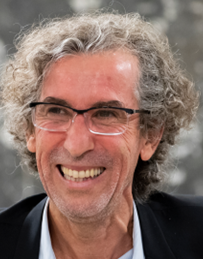
Dear Colleagues and Friends, dear ANIMMA attendees,
Nowadays nuclear measurement techniques and associated instrumentation are still in progress, and, within high-energy physics experiments, still bring a key contribution to fundamental research and to our knowledge of the Universe and its fundamental laws, the “physics of the two infinites”. They also enable us to control nuclear reactors, to monitor the dosimetry, to contribute in public health in the field of diagnosis and therapy, to ensure some controls and characterization related to transport safety, radioactive wastes and dismantling operations, to check the compliance of components and industrial processes, to monitor pollution, to cope with nuclear proliferation… Not less than that, so to say!
I think we are all well aware of the fact that, over the past few decades, we have made tremendous progress in the development of measuring devices, data processing and analysis tools in many areas of interest such as computing (data mining, Artificial Intelligence, Algorithmic, Machine Learning and Deep Learning), robotics, space, health technologies, energy, environment, and transport. These advances unavoidably affect the requested performances of predictive modelling tools as well as experimental capabilities linked to our fields of activities. In this respect, ANIMMA scientific community has both the legitimacy and the leadership to face these challenges, and continuously develop a relevant international network.
As such, ANIMMA conference and the associated network is a seedbed of new scientific international collaborations dealing with experimental sciences and technologies.
The ANIMMA Conference has always strived to create a special meeting place shared by all those working in nuclear instrumentation and measurement and their applications, as we strongly believe that cross-border exchanges between scientists, engineers and industrialists can only lead to the most developed ideas, the best solutions and the most efficient collaborations and partnerships. Therefore, ANIMMA continues to maintain a high level of scientific and technical quality by presenting not only the latest advances but also the state of the art in each field through the participation of international specialists and experts.
ANIMMA-2025 is the ninth edition of a series of conferences with a scientific program dealing with:
- 3 full days dedicated to ANIMMA International Summer School (AISS) from June 7 to 9
- A full-day dedicated to 4 international workshops on Monday June 9
- 3 prestigious keynote lectures on Tuesday June 10 during the opening ceremony
- 3 relevant plenary talks on Wednesday 11th, Thursday 12th and Friday 13th at the start of each day followed by parallel oral sessions
- Intensive oral sessions to promote posters on Tuesday 10th and Wednesday 11th afternoon followed by plenary poster session
- Permanent poster and industrial exhibition from Tuesday 10th to Friday 13th
More than 280 scientific presentations were given during the conference.
ANIMMA-2025 welcomed 356 attendees from 27 countries including 80 graduate students. We awarded 2 best student papers and 3 best posters.
The attendees deserve our warmest thanks and consideration for making this eighth edition a great success in the wonderful city of Valencia, Spain.
All the committee members are looking forward to welcoming everyone again at ANIMMA2027 in Prague, Czech Republic.
Prof. Dr. Abdallah Lyoussi
ANIMMA General Chairman and Program Committee Chair
Committee Chairs
General & Program Committee Chair and Co-chair: Abdallah Lyoussi and Rastislav Hodak
Scientific Committee Chair and Co-chair: Stanislav Pospisil and Michel Carette
Steering Committee Chair and Co-chair: Carmen García and Andrés Gadea
Local Organizing Committee Chair and Co-chair: Gabriela Llosá and Carlos Mariñas
Workshops and AISS School Organization Chairs and Co-chairs: Christelle Reynard-Carette, Ludo Vermeeren, Ana Ros García and Fernando Hueso González
Sponsors and Exhibitors
Platinum

Gold

Silver
Sponsors
Partners
Supporting institutions
CHEP 2024 - 27th International Conference on Computing in High Energy and Nuclear Physics


Preface
The 27th International Conference on Computing in High Energy and Nuclear Physics (CHEP), organized by the AGH University of Science and Technology together with the Henryk Niewodniczanski Institute of Nuclear Physics Polish Academy of Sciences and Jagiellonian University, took place in Krakow, Poland, from 19–25 October 2024. The conference attracted around 500 registered participants from 33 different countries and 166 institutions. Scientific presentations were made over the five days of the conference. Twenty longer talks have been presented in plenary sessions; 350+ shorter talks have been presented in parallel sessions; and 140+ posters have been displayed, split over four dedicated sessions.
The CHEP conferences address the computing, networking and software issues for the world’s leading data-intensive science experiments that currently analyze hundreds of petabytes of data using worldwide computing resources. The Conference provides a unique opportunity for computing experts across Particle and Nuclear Physics to come together and learn from each other.
The inaugural CHEP conference took place in 1985 and has continued with a roughly 18 month cadence since that time.
CHEP conferences
| Name | Date | Location |
|---|---|---|
| CHEP'85 | 25–28 June 1985 | Amsterdam, Netherlands |
| CHEP'87 | 2–6 February 1987 | Asilomar, California, United States |
| CHEP'89 | 10–14 April 1989 | Oxford, England, United Kingdom |
| CHEP'90 | 9–13 April 1990 | Santa Fe, New Mexico, United States |
| CHEP'91 | 11–15 March 1991 | Tsukuba, Japan |
| CHEP'92 | 21–25 September 1992 | Annecy, France |
| CHEP'94 | 21–27 April 1994 | San Francisco, California, United States |
| CHEP'95 | 18–22 September 1995 | Rio de Janeiro, Brazil |
| CHEP'97 | 7–11 April 1997 | Berlin, Germany |
| CHEP'98 | 31 August - 4 September 1998 | Chicago, Illinois, United States |
| CHEP2000 | 7–11 February 2000 | Padova, Italy |
| CHEP'01 | 3–7 September 2001 | Beijing, China |
| CHEP'03 | 24–28 March 2003 | San Diego, California, United States |
| CHEP'04 | 27 September - 1 October 2004 | Interlaken, Switzerland |
| CHEP'06 | 13–17 February 2006 | Mumbai, India |
| CHEP'07 | 2–7 September 2007 | Victoria, British Columbia, Canada |
| CHEP'09 | 21–27 March 2009 | Prague, Czech Republic |
| CHEP'10 | 18–22 October 2010 | Taipei, Taiwan |
| CHEP'12 | 21–25 May 2012 | New York, New York, United States |
| CHEP'13 | 14-18 October 2013 | Amsterdam, Netherlands |
| CHEP'15 | 13-17 April 2015 | Okinawa, Japan |
| CHEP'16 | 10-14 October 2016 | San Francisco, California, United States |
| CHEP'18 | 9-13 July 2018 | Sofia, Bulgaria |
| CHEP'19 | 4-8 November 2019 | Adelaide, Australia |
| vCHEP'21 | 17–21 May 2021 | Virtual event hosted by CERN |
| CHEP'23 | 5-11 May 2023 | Norfolk, Virginia |
Sponsors
Primary support for the CHEP 2024 conference was provided by AGH University of Science and Technology, the Henryk Niewodniczanski Institute of Nuclear Physics Polish Academy of Sciences and Jagiellonian University. Additional support was provided by the EGI Foundation with the two coordinated projects interTwin and SPECTRUM, Krakow City, and LOT - Polish Airlines.

ATALANTE 2024

About the conference
Organized since 2000 by the French Alternative Energies and Atomic Energy Commission (CEA), the ATALANTE Conference provides an international forum for presentations and discussions on advances for future fuel cycles and waste management.

The 2024 edition that took place in Avignon included plenary, technical and poster sessions selected on subjects and issues that cover almost all the fields of the nuclear chemistry related to the nuclear fuel cycles:
- Actinide and fission product chemistry
- Uranium ore processing and purification
- Actinide separation
- Pyrochemistry and chemistry for molten salt reactor
- Actinide material & fuel fabrication
- Waste conditioning and long-term evolution
- Nuclear chemistry for geological repository
- Safeguards and analytical developments

ATALANTE conferences
| Name | Date | Location |
| ATALANTE 2000 | October 24-26, 2000 | Avignon (France) |
| ATALANTE 2004 | June 21-24, 2004 | Nimes (France) |
| ATALANTE 2008 | May 19-22, 2008 | Montpellier (France) |
| ATALANTE 2012 | September 3-7, 2012 | Montpellier (France) |
| ATALANTE 2016 | June 5-10, 2016 | Montpellier (France) |
| ATALANTE 2024 | September 1-6, 2024 | Avignon (France) |
Committees
General Chairs: Philippe GUILBAUD (CEA), Christophe JOUSSOT-DUBIEN (CEA)
Local Organizing Committee: Sarah BAGHDADI (CEA), Sandrine COSTENOBLE (CEA), Anne LÉLIAS (CEA), Sylvain PEUGET (CEA), Christelle TAMAIN (CEA), Mélodie ORTIGOSA (CEA), Marieke BILLET (CEA)

International Advisory Committee: Bénedicte ARAB-CHAPELET (CEA), Laurence BERTHON (CEA), Sophie CHARTON (CEA), Nicolas DACHEUX (Univ. Montpellier), Eva DE VISSER-TYNOVA (NRG), Christian EKBERG (Univ. Chalmers), Kerstin FORSBERG (KTH), Hitos GALAN MONTANO (CIEMAT), Andreas GEIST (KIT-INE), Bruce HANSON (Univ. Leeds), Anamul HAQ MIR (Univ. Huddersfield), Clément HILL (IAEA), Gregory HOLMBECK (INL), Santa JANSONE-POPOVA (ORNL), Elena MACERATA (POLITECNICO di MILANO), Giuseppe MODOLO (FZJ), Cédric RIVIER (CEA), Pier Lorenzo SOLARI (SOLEIL), Christian SOREL (CEA), Robin TAYLOR (NNL), Carole VALOT (CEA), Thierry WISS (JRC), Karen WRIGHT (INL)
Conference pictures
Download here a zip archive of the pictures.


CHEP 2023 - 26th International Conference on Computing in High Energy and Nuclear Physics
Preface
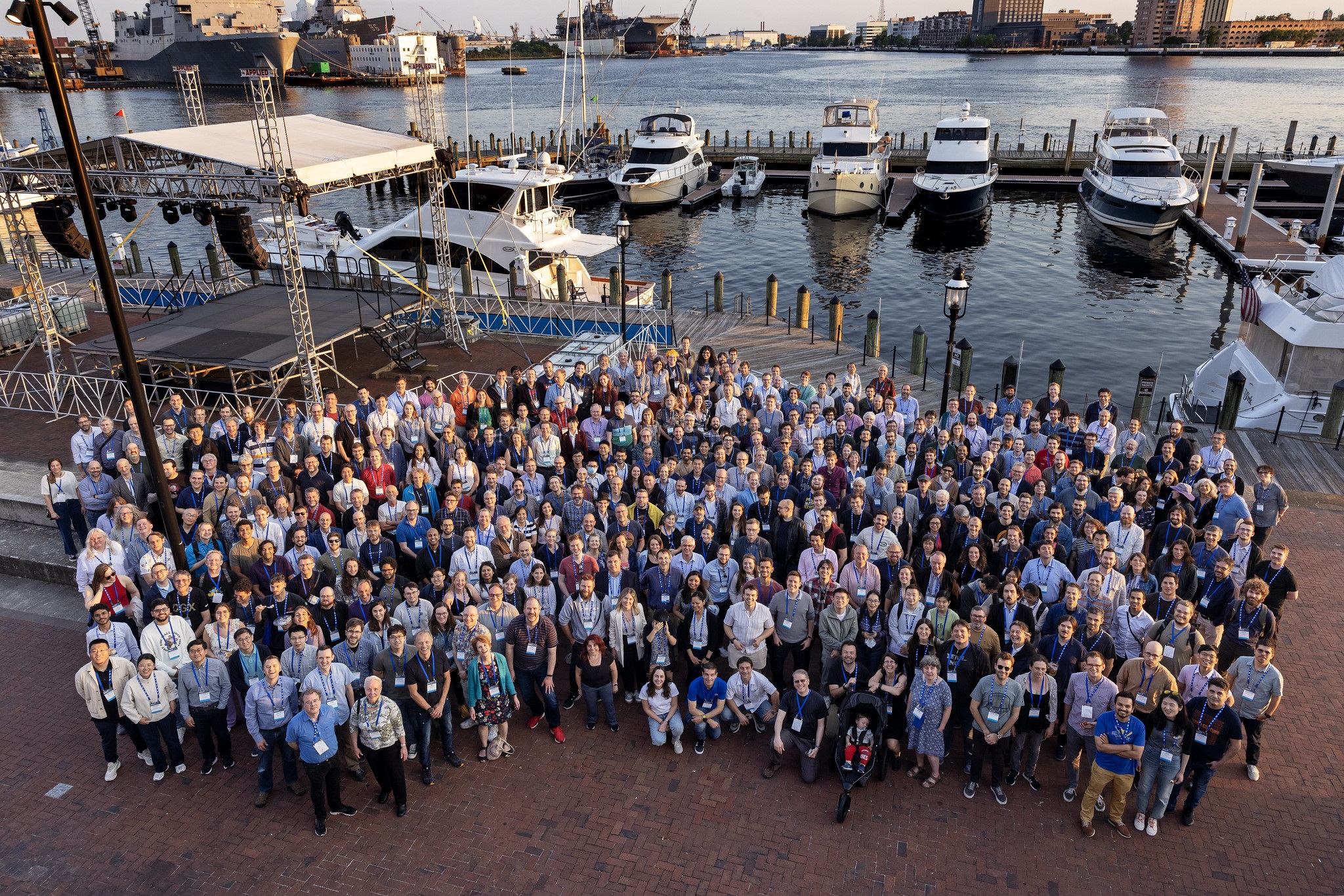
The 26th International Conference on Computing in High Energy and Nuclear Physics (CHEP), organized by Jefferson Lab, took place in Norfolk, Virginia from 5–11 May 2023. The conference attracted 581 registered participants from 28 different countries. There were scientific presentations made over the 5 days of the conference. These were divided between 20 long talks and 2 keynotes, which were presented in plenary sessions; 450+ short talks, which were presented in parallel sessions; and 140+ posters split over two dedicated sessions.
The CHEP conferences address the computing, networking and software issues for the world’s leading data-intensive science experiments that currently analyze hundreds of petabytes of data using worldwide computing resources. The Conference provides a unique opportunity for computing experts across Particle and Nuclear Physics to come together and learn from each other.
The inaugural CHEP conference took place in 1985 and has continued with a roughly 18 month cadence since that time.
CHEP conferences
| Name | Date | Location |
|---|---|---|
| CHEP'85 | 25–28 June 1985 | Amsterdam, Netherlands |
| CHEP'87 | 2–6 February 1987 | Asilomar, California, United States |
| CHEP'89 | 10–14 April 1989 | Oxford, England, United Kingdom |
| CHEP'90 | 9–13 April 1990 | Santa Fe, New Mexico, United States |
| CHEP'91 | 11–15 March 1991 | Tsukuba, Japan |
| CHEP'92 | 21–25 September 1992 | Annecy, France |
| CHEP'94 | 21–27 April 1994 | San Francisco, California, United States |
| CHEP'95 | 18–22 September 1995 | Rio de Janeiro, Brazil |
| CHEP'97 | 7–11 April 1997 | Berlin, Germany |
| CHEP'98 | 31 August - 4 September 1998 | Chicago, Illinois, United States |
| CHEP2000 | 7–11 February 2000 | Padova, Italy |
| CHEP'01 | 3–7 September 2001 | Beijing, China |
| CHEP'03 | 24–28 March 2003 | San Diego, California, United States |
| CHEP'04 | 27 September - 1 October 2004 | Interlaken, Switzerland |
| CHEP'06 | 13–17 February 2006 | Mumbai, India |
| CHEP'07 | 2–7 September 2007 | Victoria, British Columbia, Canada |
| CHEP'09 | 21–27 March 2009 | Prague, Czech Republic |
| CHEP'10 | 18–22 October 2010 | Taipei, Taiwan |
| CHEP'12 | 21–25 May 2012 | New York, New York, United States |
| CHEP'13 | 14-18 October 2013 | Amsterdam, Netherlands |
| CHEP'15 | 13-17 April 2015 | Okinawa, Japan |
| CHEP'16 | 10-14 October 2016 | San Francisco, California, United States |
| CHEP'18 | 9-13 July 2018 | Sofia, Bulgaria |
| CHEP'19 | 4-8 November 2019 | Adelaide, Australia |
| vCHEP'21 | 17–21 May 2021 | Virtual event hosted by CERN |
Organisation and Committees
Program Committee Co-Chairs
The Program Committee chairs play an enormous role in the execution of a CHEP conference.
| Name | Affiliation |
|---|---|
| Raffaella De Vita | JLab and INFN, Italy |
| Xavier Espinal | CERN, Switzerland |
| Paul Laycock | Brookhaven National Lab, USA |
| Oksana Shadura | University of Nebraska-Lincoln, USA |
Track Conveners
The Track Conveners supported the PC chairs in review and promotion of presentations prior to the conference, participated in running the parallel sessions during the conference, and played critical editorial roles developing this Proceedings post-conference.
| Name | Affiliation |
|---|---|
| Roel Aaij | Nikhef |
| Claire Antel | Ruprecht-Karls-Universität Heidelberg |
| Marilena Bandieramonte | U. of Pittsburgh |
| Martin Barisits | CERN |
| Fernando Barreiro | U. of Texas at Arlington |
| Diego Davila | UCSD |
| Markus Diefenthaler | JLab |
| Katy Ellis | STFC-SCD |
| Giulio Eulisse | CERN |
| Elena Gazzarrini | CERN |
| Stephan Hageboeck | CERN |
| David Heddle | Christopher Newport U. |
| Alexander Held | U. of Wisconsin-Madison |
| Rohini Joshi | SKA |
| Kolja Kauder | BNL |
| Michael Kirby | FNAL |
| Tomoe Kishimoto | Kobe Univ. |
| Clemens Lange | PSI |
| Mario Lassnig | CERN |
| Verena Martinez | U. of Mass. Amherst |
| Hideki Miyake | KEK |
| Felice Pantaleo | CERN |
| Stefano Dal Pra | CNAF, INFN |
| Wahid Redjeb | CERN |
| Eduardo Rodrigues | U. of Liverpool |
| André Sailer | CERN |
| Jana Schaarschmidt | U. of Washington |
| Liz Sexton-Kennedy | FNAL |
| Ruben Shahoyan | CERN |
| Nicole Skidmore | U. of Manchester |
| Norraphat Srimanobhas | Chulalongkorn Univ. |
| Steve Timm | FNAL |
| Sofia Vallecorsa | CERN |
| Michel Hernandez Villanueva | Desy |
| Derek Weitzel | U. of Nebraska-Lincoln |
| Sandro Christian Wenzel | CERN |
| Arne Wiebalck | CERN |
| Satoru Yamada | KEK |
| Tingjun Yang | FNAL |
International Advisory Committee
The International Advisory Committee is a large group with experience of previous CHEP conferences and are experts in the field. Their role is to advise the Program Committee and Local Organizing Committee.
| Name | Affiliation |
|---|---|
| Sang Un Ahn | KISTI |
| Mohammad Al-Turany | GSI |
| Julia Andreeva | CERN |
| Latchezar Betev | CERN |
| Ian Bird | CERN |
| Catherine Biscarat | L2IT (CNRS/IN2P3, UT3) |
| Tommaso Boccali | INFN Pisa |
| Concezio Bozzi | INFN Ferrara |
| David Britton | Glasgow |
| Simone Campana | CERN |
| James Catmore | Oslo |
| Marco Cattaneo | CERN |
| Gang Chen | IHEP |
| Peter Clarke | Edinburgh |
| Caterina Doglioni | Lund |
| Peter Elmer | Princeton Univ. |
| Alessandra Forti | Manchester |
| Patrick Fuhrmann | DESY |
| Maria Girone | CERN |
| Heather Gray | UC Berkeley/LBNL |
| David Groep | Nikhef |
| Takanori Hara | KEK |
| Peter Hristov | CERN |
| Paul Jackson | Univ. of Adelaide |
| Michel Jouvin | IJCLab (CNRS/IN2P3) |
| Waseem Kamleh | Univ. of Adelaide |
| Jerome Lauret | BNL |
| Paul Laycock | BNL |
| Gonzalo Merino | PIC/CIEMAT |
| Bronson Messer | ORNL |
| Richard Mount | SLAC (Retired) |
| Niko Neufeld | CERN |
| Stefano Piano | INFN sez. Trieste |
| Danilo Piparo | CERN |
| Ghita Rahal | IN2P3/CNRS |
| Stefan Roiser | CERN |
| Heidi Schellman | Oregon State |
| Pat Scott | Univ. of Queensland |
| Elizabeth Sexton-Kennedy | FNAL |
| Hannah Short | CERN |
| Lucia Silvestris | INFN Bari |
| Simon | Fraser, TRIUMF |
| Oxana Smirnova | Lund |
| Randall Sobie | Victoria |
| Graeme A. Stewart | CERN |
| Reda Tafirout | TRIUMF |
| Ikuo Ueda | KEK |
| Raffaella De Vita | INFN |
| Gordon Watts | Univ. of Washington |
| Torre Wenaus | BNL |
| Andreas Wicenec | UWA/ICRAR |
| Eric Yen | Academia Sinica |
Local Organizing Committee
The CHEP 2023 conference was chaired by Amber Boehnlein, Graham Heyes, and Brad Sawatzky. The chairs wish to ephasize the fantastic support of the entire Local Organizing Committee. Realizing CHEP’23 was a uniquely long road with many unexpected bumps. Thank you all for sticking with the project and executing it so well!
| Name | Affiliation |
|---|---|
| Amber Boehnlein (Co-chair) | JLab |
| Graham Heyes (Co-chair) | JLab |
| Brad Sawatzky (Co-chair) | JLab |
| David Abbott | JLab |
| Ed Brash | CNU |
| Logan Chappell | JLab |
| Taylor Childers | ANL |
| Paul Letta | JLab |
| Brent Morris | JLab |
| Terryn Morton | JLab |
| Anita Seay | JLab |
| Lisa Surles-Law | JLab |
Supports
Primary support for the CHEP 2023 conference was provided by Thomas Jefferson National Lab, Jefferson Science Associates (JSA), DOE / Office of Nuclear Physics, DOE / Office of High Energy Physics, and the International Union of Pure and Applied Physics (IUPAP). Additional support was provided by ideas4hpc, Dell Technologies, SEAL Storage Technologies, CTG Federal, Sycomp, IBM, SuperMicro, WEKA, and CAEN Technologies.
Series
- ANIMMA - Advancements in Nuclear Instrumentation Measurement Methods and their Applications
- ARENA - International Conference on Acoustic and Radio EeV Neutrino Detection Activities
- AtmoHEAD - Atmospheric Monitoring for High Energy Astro Particle Detectors
- AVTFG - All-Russian School-Conference of Young Scientists with International Participation “Actual Problems of Thermal Physics and Physical Hydrodynamics”
- AYSS - The International Scientific Conference of Young Scientists and Specialists
- CHEP - International Conference on Computing in High Energy and Nuclear Physics
- CGS15 - Fifteenth International Symposium on Capture Gamma-Ray Spectroscopy and Related Topics
- CNR – International Workshop on Compound Nuclear Reactions & Related topics
- CTD – Connecting The Dots
- E2C – European Energy Conference
- EC - Joint Workshop on Electron Cyclotron Emission and Electron Cyclotron Resonance Heating
- EFM - Experimental Fluid Mechanics
- ENAS - European Summer School on Experimental Nuclear Astrophysics
- EOSAM - European Optical Society Annual Meeting
- ERCA – European Research Course on Atmospheres
- FB - International Conference on Few-Body Problems in Physics
- FCCP - International Workshop on “Flavour Changing and Conserving Processes”
- HCP - Hadron Collider Physics Symposium
- Heavy Ion Accelerator Symposium
- ICNFP - International Conference on New Frontiers in Physics
- International Conference FUSION
- ICRS-13 & RPSD-2016, 13th International Conference on Radiation Shielding & 19th Topical Meeting of the Radiation Protection and Shielding Division of the American Nuclear Society
- International Conference on Few-Body Problems in Physics
- ISHEPP - International Baldin Seminar on High Energy Physics Problems “Relativistic Nuclear Physics and Quantum Chromodynamics”
- ISMD - International Symposium on Multiparticle Dynamics
- ISVHECRI - International Symposium on Very High Energy Cosmic Ray Interactions
- IWQO - International Workshop on Quantum Optics
- JEMS - The Joint European Magnetic Symposia
- Lecture Notes - Joint EPS-SIF International School on Energy
- MENU - Meson-Nucleon Physics and the Structure of the Nucleon
- MESON - International Workshop on Production, Properties and Interaction of MESONS
- MINOS - Materials Innovation for Nuclear Optimized Systems
- MMCP - Mathematical Modeling and Computational Physics
- ND - International Conference on Nuclear Data for Science and Technology
- NSRT - International Conference on Nuclear Structure and Related Topics
- PhiPsi - The International Workshop on e+e- Collisions from Phi to Psi
- QCD@Work - International Workshop on Quantum Chromodynamics Theory and Experiment
- QENS/WINS
- QFTHEP - International Workshop "High Energy Physics and Quantum Field Theory"
- QUARKS - International Seminar on High Energy Physics
- RICAP - Roma International Conference on Astroparticle Physics
- SOS - School of Statistics
- SQM - International Conference on Strangeness in Quark Matter
- TESNAT – Theoretical and Experimental Studies in Nuclear Applications and Technology
- UHECR - Ultra High Energy Cosmic Rays
- UP - International Conference on Ultrafast Phenomena
- VLVnT - Very Large Volume Neutrino Telescope
- WONDER - International Workshop On Nuclear Data Evaluation for Reactor applications
c - 7th Moscow International Symposium on Magnetism

MISM-2017 - 7th Moscow International Symposium on Magnetism
July 1-5, 2017, Faculty of Physics, Lomonosov Moscow State University (MSU)
Foreword
This special issue of EPJ Web of Conferences contains contributed peer-reviewed papers from the 7th Moscow International Symposium on Magnetism MISM-2017 held at the Faculty of Physics, Lomonosov Moscow State University (MSU), on July 1-5, 2017.
This international meeting of scientists working in magnetism and related areas has been held every three years after the first Symposium in 1999. During the past years MISM grew from the local workshop to the largest international conference on magnetism in Russia. The number of participants and the scientific level of contributions make MISM one of the representative conferences on magnetism in the world.
There were 1131 registered applications to participate in MISM-2017, 886 scientists have attended the Symposium and presented more than 900 contributions accepted by Program Committee. MISM-2017 scientific program consisted of four working days and included 10 plenary lectures on the most actual topics in modern magnetism, up to 11 parallel sessions every day where 383 talks have been given, and relevant poster sessions with almost 500 presented contributions.
The scientific program of MISM-2017 included all of the most interesting and relevant areas of modern physics of magnetic phenomena and materials which were presented from the hundreds of scientific research groups. To give the plenary talks the world leading scientists were invited from Germany, France, Spain, UK, the Netherlands, USA, Russia and Japan, they shared their outstanding expertise and overviewed the advanced research ideas and projects. In addition to expectedly large number of participants from Russian Universities and Institutes, more than 200 colleagues from 34 countries have participated in Symposium. The most numerous delegations were represented by Germany (48 participants), Japan (27 participants) and France (22 participants). There were 9 colleagues from former Soviet Union countries (from Ukraine, Belarus, Estonia, Latvia, Tajikistan and Uzbekistan).
More than 260 manuscripts have been submitted as Proceedings of MISM-2017. After a rigorous peer-review process, about 200 manuscripts were accepted for publication in two volumes - special issue of Journal of Magnetism and Magnetic Materials (Elsevier) for invited and selected papers and this open access volume of EPJ Web of Conferences for regular contributions.
The Organizing, Program and International Advisory Committees would like to thank all participants for their valuable contributions that made this meeting remarkably successful. We also would like to thank the session chairpersons and invited reviewers for their cooperation and assistance, which was essential for the high scientific quality of MISM-2017 program and Proceedings, as well as EPJ Web of Conferences team for experienced editorial support. We acknowledge the funding provided by Russian Foundation for Basic Research (RFBR) and appreciate the organizational support from Lomonosov MSU and Faculty of Physics, expressing our gratitude for provided facilities and conference venue.
Finally, we would like to emphasize that the success of Symposium would not be possible without operative work of Local Organizing Committee. We highly appreciate the enthusiasm and reliability of students from MSU Faculty of Physics and Moscow Technological University MIREA as well as our friends and colleagues who perfectly handled their assigned tasks working as one well-coordinated team.
We hope you will read the papers from this volume of EPJ Web of Conferences with interest and pleasure, which we had while editing it. In addition, we would like to invite you to attend our next Symposium MISM-2020 (see https://mism.magn.ru).
Editors
MISM-2017 Organizing Committee Co-Chairman
Prof. Dr. Nikolai S. Perov
Faculty of Physics, Lomonosov MSU, Moscow, Russia
This email address is being protected from spambots. You need JavaScript enabled to view it.
MISM-2017 Organizing Committee Secretary
Dr. Anna S. Semisalova
Faculty of Physics, Lomonosov MSU, Moscow, Russia
This email address is being protected from spambots. You need JavaScript enabled to view it.
Organizing Committee
Chairmen
A. Vedyaev
A. Granovsky
N. Perov
Secretary
A. Semisalova
International Advisory Committee
Chairman: V. Sadovnichy
S. Bader (Argonne)
M. Barandiaran (Bilbao)
A. Buzdin (Bordeaux)
Ching-Ray Chang (Taipei)
B. Dieny (Grenoble)
M. Farle (Duisburg)
A. Fert (Orsay)
D. Fiorani (Rome)
D. Givord (Grenoble)
J. Gonzalez (San Sebastian)
B. Heinrich (Burnaby)
B. Hernando (Oviedo)
M. Inoue (Toyohashi)
X. Jin (Shanghai)
D. Khmelnitskii (Cambridge)
D. Khomskii (Köln)
C. Lacroix (Grenoble)
S. Maekawa (Tokai)
D. Mapps (Plymouth)
S. Ovchinnikov (Krasnoyarsk)
S. Parkin (Halle)
Th. Rasing (Nijmegen)
H. Szymczak (Warsaw)
V. Ustinov (Ekaterinburg)
M. Vazquez (Madrid)
National Advisory Committee
Chairman: N. Sysoev
V. Berzhanskii
M. Chetkin
A. Fedyanin
D. Khokhlov
N. Kreines
A. Lagar’kov
S. Maleev
S. Nikitin
S. Nikitov
R. Pisarev
V. Prudnikov
A. Saranin
V. Shavrov
A. Sigov
A. Vasiliev
V. Veselago
N. Volkov
A. Zvezdin
Program Committee
Chairman: A. Granovsky
Secretary: A. Semisalova
M. Acet (Duisburg)
B. Aktas (Gebze)
A. Andreev (Prague)
B. Aronzon (Moscow)
N. Bebenin (Ekaterinburg)
D. Berkov (Jena)
V. Chernenko (Bilbao)
M. Chshiev (Grenoble)
S. Demokritov (Münster)
E. Gan’shina (Moscow)
A. Kalashnikova (St. Petersburg)
O. Kazakova (London)
V. Khovailo (Moscow)
Cheol Gi Kim (Daejon)
A. Kimel (Nijmegen)
A. Kirilyuk (Nijmegen)
K. Kugel (Moscow)
G. Kurlyandskaya (Ekaterinburg)
X. Li (Singapore)
A. Michels (Luxembourg)
V. Novosad (Argonne)
Yu. Pastushenkov (Tver)
N. Pugach (Moscow)
A. Pyatakov (Moscow)
A. Radkovskaya (Moscow)
Yu. Raikher (Perm)
V. Rodionova (Kaliningrad)
A. Rogalev (Grenoble)
K. Rozanov (Moscow)
E. Shalygina (Moscow)
E. Shamonina (Erlangen)
A. Smirnov (Moscow)
L. Tagirov (Kazan)
M. Yamaguchi (Sendai)
A. Zhukov (San Sebastian)
M. Zhuravlev (Moscow)
V. Zubov (Moscow)
K. Zvezdin (Moscow)
Local Committee
Chairman: N. Perov
N. Abrosimova
Yu. Alekhina
V. Bessalova
S. Granovsky
E. Gan'shina
M. Khairullin
A. Kharlamova
I. Kovaleva
S. Koptsik
O. Kotel'nikova
A. Kudakov
Yu. Kurbatova
A. Loseva
L. Makarova
L. Mironova
S. Norina
E. Pan'kova
N. Perova
V. Prudnikov
M. Prudnikova
A. Radkovskaya
I. Rodionov
T. Rusakova
N. Ryzhanova
A. Semisalova
T. Shapaeva
N. Strelkov
D. Svirin
V. Tyablikov
E. Shalygina
V. Zubov